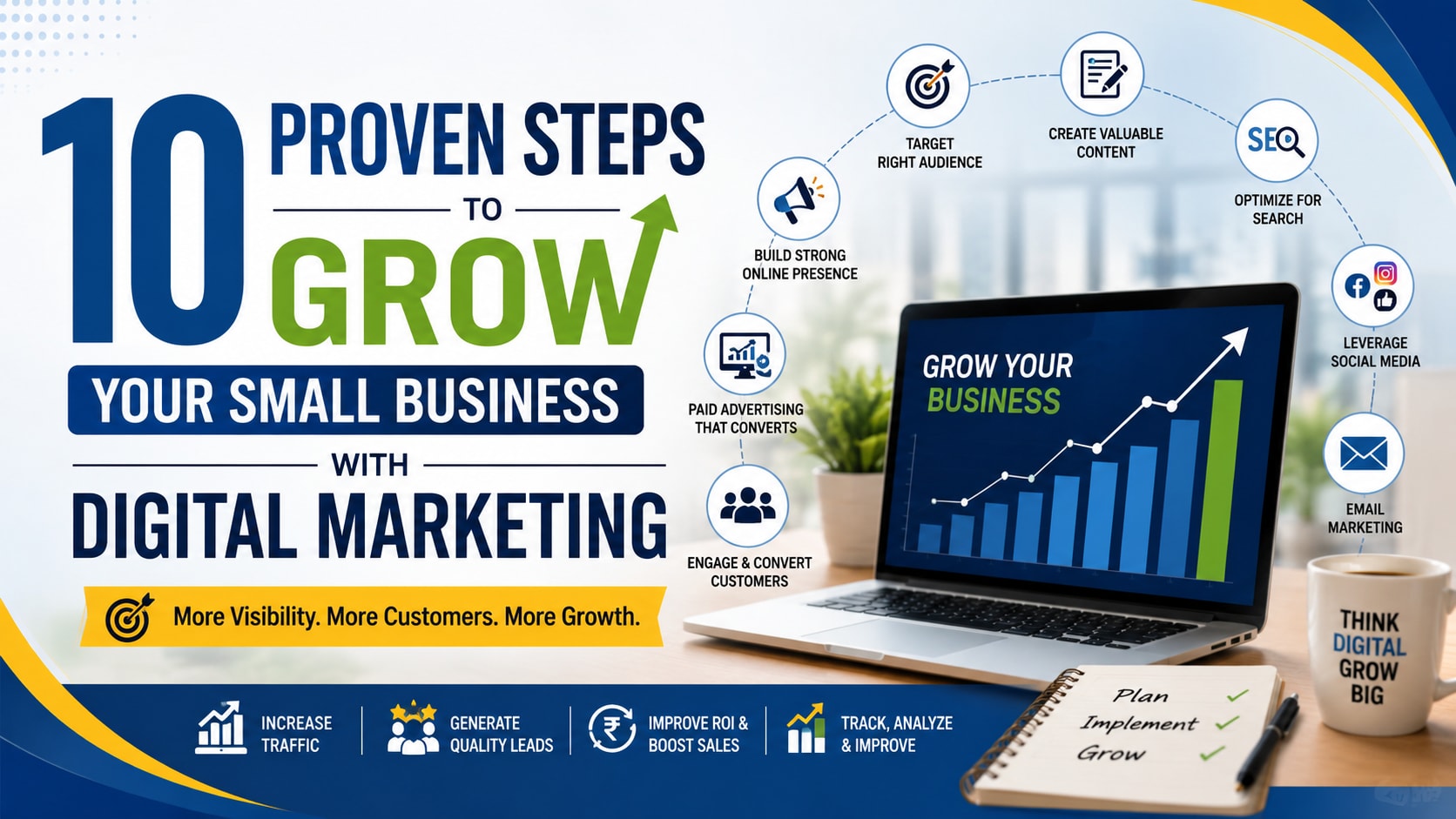
10 Proven Steps to Grow Your Small Business with Digital Marketing
If you own a small business, you already know that a great product or service isn't enough on its own. Customers need to find you, trust you, and remember you — and that's exactly what digital marketing for small business is designed to do

If you own a small business, you already know that a great product or service isn't enough on its own. Customers need to find you, trust you, and remember you — and that's exactly what digital marketing for small business is designed to do. Whether you run a local bakery, a boutique consulting firm, or an online store, the right digital approach lets you compete with much larger brands without needing a massive advertising budget.
The challenge for most owners isn't a lack of effort; it's not knowing where to focus that effort. There are dozens of platforms, tools, and tactics competing for your attention, and it's easy to spread yourself thin without seeing real results. This guide cuts through the noise and breaks small business digital marketing down into ten proven, practical steps you can follow in order, or adapt based on where your business currently stands.
By the end, you'll have a clear, realistic roadmap for how to grow a small business online — one that builds momentum steadily instead of chasing short-lived trends.
1. Build a Clear Digital Marketing Strategy
Before you post a single social media update or launch an ad campaign, take time to define what success actually looks like. Are you trying to drive more website traffic, generate qualified leads, or increase in-store visits? Without a clear direction, even the best digital marketing strategies for small business owners can end up wasting time and money.
Set SMART Goals
Use goals that are Specific, Measurable, Achievable, Relevant, and Time-bound. A goal like 'increase website leads by 20% within three months' gives your team something concrete to work toward, unlike a vague target such as 'get more customers.' Write your goals down and revisit them monthly to track real progress.
Know Your Audience
Create a simple customer profile that outlines age range, location, income level, interests, and the specific problems your business solves for them. Every piece of content, every ad, and every email you send afterward should speak directly to this audience rather than trying to appeal to everyone at once.
Choose the Right Channels
Not every business needs to be on every platform. A local plumbing company might get more value from local SEO and Google ads, while a fashion brand may thrive on Instagram and email marketing. Matching your strategy to where your audience actually spends time saves both time and money.
2. Build a Fast, Mobile-Friendly Website
Your website is often the very first impression a potential customer forms of your business. A slow, cluttered, or non-mobile-friendly site will send visitors straight to a competitor before they even see what you have to offer. This is one of the simplest yet most overlooked small business marketing ideas, and fixing it can have an immediate impact on conversions.
Prioritize Speed and Usability
Compress your images, choose a lightweight website theme, and remove unnecessary plugins or scripts that slow down load times. Make sure your navigation is intuitive, your contact information is easy to find, and your calls-to-action are visible on every page, especially on mobile screens.
Add Trust Signals
Customer testimonials, industry certifications, security badges, and clear contact details all help build credibility. When visitors can quickly see that real people trust your business, they're far more likely to take the next step, whether that's making a purchase or filling out a contact form.
Make Conversion Easy
Reduce friction wherever possible. Shorten contact forms, offer multiple ways to reach you, and ensure your checkout process, if you sell online, takes only a few clicks from start to finish.
3. Invest in Local SEO
For the vast majority of small businesses, customers are searching for solutions nearby. Local digital marketing for small business starts with optimizing your online presence so that when someone searches for a product or service in your area, your business shows up first.
Claim and Optimize Your Google Business Profile
Fill out every section of your profile completely — business hours, categories, photos, services, and a compelling description. Keep this information consistent across your website, social media, and any online directories, since inconsistent listings can hurt your local search rankings.
Target Location-Based Keywords
Naturally incorporate phrases like 'best coffee shop in [city]' or 'affordable landscaping near me' throughout your website content, blog posts, and page titles. This helps search engines understand exactly where you operate and who you serve.
Build Local Citations and Backlinks
Get listed in local business directories, chambers of commerce, and industry associations. These citations reinforce your legitimacy to search engines and can drive additional referral traffic to your site.
4. Create Valuable, Search-Optimized Content
Content marketing remains one of the most cost-effective forms of online marketing for small business owners. Blog posts, how-to guides, and FAQ pages answer real questions your customers are already searching for, while simultaneously improving your visibility in search engine results.
Focus on Search Intent
Instead of writing content that simply promotes your products, write content that solves a specific problem. If you run a pet grooming business, a post titled 'How Often Should You Bathe Your Dog?' will attract far more organic traffic than a post that only talks about your services.
Use Keywords Naturally
Research the terms your ideal customers are typing into search engines and weave them naturally into your headlines, subheadings, and body copy. Avoid keyword stuffing — search engines and readers both reward content that reads naturally while still being informative.
Update Content Regularly
Refreshing older blog posts with new statistics, examples, or insights signals to search engines that your site is active and trustworthy, which can help maintain or improve your rankings over time.
5. Leverage Social Media Strategically
You don't need to maintain a presence on every social platform. Choose one or two channels where your ideal customers actually spend their time, and commit to posting consistently rather than sporadically.
Show Behind-the-Scenes Content
Authentic, slightly unpolished content — like a quick look at your workspace, your team, or your process — often outperforms overly polished promotional posts. People connect with real stories more than they do with advertisements.
Engage, Don't Just Broadcast
Reply to comments and direct messages promptly and personally. Genuine engagement builds loyalty, encourages repeat visits to your profile, and often leads to valuable word-of-mouth referrals.
Mix Content Types
Blend educational posts, customer testimonials, promotions, and light entertainment to keep your feed varied. This variety keeps followers interested and reduces the chance they'll scroll past your content without engaging.
6. Use Email Marketing to Build Relationships
Email remains one of the highest-return channels within small business digital marketing. Unlike social media, you own your email list, which means algorithm changes on other platforms won't affect your ability to reach your audience directly.
Segment Your List
Group subscribers by their interests, purchase history, or engagement level so you can send more relevant and personalized messages. Segmented campaigns consistently see higher open and click-through rates than generic, one-size-fits-all emails.
Automate Welcome and Follow-Up Sequences
A simple automated welcome series introduces new subscribers to your brand story, best-selling products, or most popular services without requiring extra manual work from you or your team.
Send Value, Not Just Promotions
Mix helpful tips, industry insights, and behind-the-scenes updates with your promotional emails. Subscribers who find genuine value in your emails are far less likely to unsubscribe.
7. Run Targeted Paid Advertising
Paid advertising on platforms like Google and Meta allows you to reach highly specific audiences quickly. This is one of the best digital marketing strategies for small business owners who want to see faster results alongside their longer-term organic efforts.
Start Small and Test
Begin with a modest daily budget, test a few different ad creatives and headlines, and monitor performance closely before scaling up whatever version performs best. Small, controlled tests prevent you from overspending on an approach that isn't working.
Retarget Website Visitors
Retargeting ads remind people who previously visited your site but didn't make a purchase or fill out a form. These ads often convert at a lower cost than campaigns aimed at completely new audiences.
Track Return on Ad Spend
Always monitor how much revenue or how many leads each dollar of ad spend generates. This lets you shift your budget toward the campaigns delivering the strongest results.
8. Encourage and Showcase Customer Reviews
Online reviews heavily influence purchasing decisions, especially for local businesses. Actively asking satisfied customers for feedback is one of the most effective small business marketing tips because it builds immediate trust with new prospects who are still deciding whether to buy from you.
Make It Easy to Leave a Review
Send a direct link via text or email shortly after a purchase or completed service, while the positive experience is still fresh in the customer's mind.
Respond to Every Review
Thank happy customers publicly, and address concerns from unhappy ones calmly and professionally. Thoughtful responses show future customers that your business genuinely cares about their experience.
Showcase Reviews Across Your Marketing
Feature your best reviews on your website homepage, in email campaigns, and within your social media content. Social proof consistently increases conversion rates.
9. Track Performance with Analytics
You can't improve what you don't measure. Regularly reviewing your marketing data helps you understand exactly how to get more customers for a small business without wasting money on tactics that simply aren't working.
Monitor Key Metrics
Track website traffic, conversion rates, email open and click rates, and ad performance on a monthly basis. Look for patterns rather than reacting to single days or isolated data points.
Adjust Based on Data
Double down on the channels bringing in real results, and scale back or rework the ones that consistently underperform. Data should guide your budget decisions more than assumptions or guesswork.
Set a Regular Review Schedule
Block time on your calendar each month specifically to review analytics. Treating this as a recurring habit, rather than an occasional task, keeps your strategy sharp and responsive.
10. Stay Consistent and Adapt Over Time
Digital marketing isn't a one-time project — it's an ongoing process. Search algorithms, social media trends, and customer behavior all shift constantly, so the businesses that grow fastest are the ones willing to test, learn, and adjust rather than set a strategy once and forget about it.
Build a Simple Content Calendar
Planning your posts, emails, and campaigns in advance keeps your marketing consistent, even during your busiest operational periods. A basic monthly calendar is often enough to stay organized.
Keep Learning
Follow reputable marketing blogs, join small business communities, and revisit your overall strategy every quarter. Staying current with best practices helps you stay ahead of competitors who may still be relying on outdated tactics.
Celebrate and Build on Wins
When something works — a campaign, a piece of content, an offer — study why it worked and look for ways to repeat that success elsewhere in your marketing.
Final Thoughts
Growing a small business online doesn't require a massive marketing department or an unlimited budget. By focusing on a clear strategy, a fast and trustworthy website, strong local SEO, valuable content, and consistent engagement across email, social media, and paid advertising, you can build steady, sustainable momentum.
These small business marketing ideas work best when used together rather than in isolation. Start with the steps that address your biggest current gap, track your results honestly, and keep refining your approach as you learn what resonates with your audience. Over time, this kind of consistent, data-informed effort is what separates small businesses that thrive online from those that struggle to be found.