Meta Layoffs: Mark Zuckerberg Cuts 8,000 Jobs But Promises No More 2026 Cuts
Meta Platforms set off one of the biggest shockwaves in Silicon Valley this year when it confirmed the elimination of roughly 8,000 jobs, close to 10 percent of its global workforce.

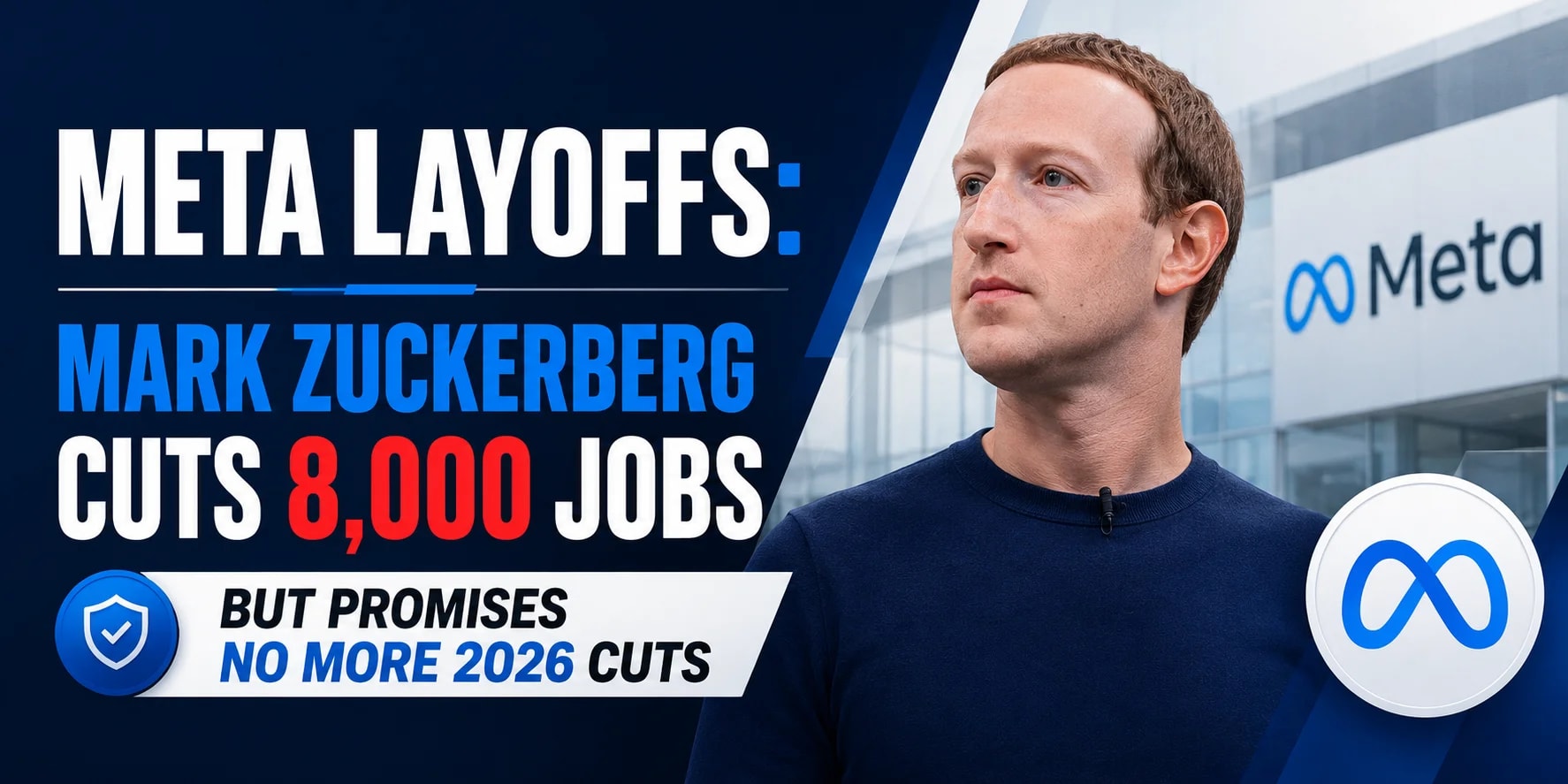
Meta Platforms set off one of the biggest shockwaves in Silicon Valley this year when it confirmed the elimination of roughly 8,000 jobs, close to 10 percent of its global workforce. The cuts began rolling out on May 20, 2026, starting with employees in Asia before moving through Europe and the Americas. Alongside the layoffs, the company also scrapped nearly 6,000 open job requisitions and reassigned another 7,000 employees into new AI-focused roles.
What makes this round of layoffs different from Meta's previous "year of efficiency" cuts in 2022 and 2023 is the timing. This time, the company wasn't reacting to a downturn. Meta reported record quarterly revenue of $56.31 billion in the same window it was cutting thousands of jobs, and it simultaneously raised its 2026 capital expenditure guidance to as much as $145 billion, largely to fund AI infrastructure and chips.
In an internal memo sent the same day the cuts began, CEO Mark Zuckerberg told employees that the restructuring was necessary because the competitive landscape around artificial intelligence leaves no room for complacency. He also promised something that caught everyone's attention: no additional company-wide layoffs for the rest of 2026.
Why Meta Cut 8,000 Jobs During a Record Quarter
On the surface, cutting staff while posting record revenue looks contradictory. But Meta's leadership has framed this restructuring as a shift in priorities rather than a cost-cutting emergency. The company is pouring money into computing power, model training, and its Superintelligence Labs division, while trimming teams it considers less central to that mission.
Reports indicate the layoffs disproportionately hit integrity, cybersecurity, and Reality Labs teams, even as AI infrastructure and monetization units were largely shielded. Reality Labs alone reportedly lost over $4 billion in the first quarter of 2026, making it one of the more exposed divisions during the reshuffle.
Meta's finance chief, Susan Li, told analysts the company is still working out what its ideal headcount looks like in an AI-driven organization. Zuckerberg has echoed that sentiment publicly, suggesting that teams which once needed dozens of employees can now run with a fraction of that number thanks to AI tools.
The Numbers Behind the Restructuring
Here's a quick breakdown of what actually changed inside Meta during this cycle:
- About 8,000 employees laid off globally, roughly 10 percent of the workforce
- Nearly 6,000 open job requisitions cancelled, effectively removing 14,000 potential positions from the company
- Around 7,000 employees reassigned into new AI-focused divisions
- 2026 capital expenditure guidance raised to as much as $145 billion
- Median total compensation reportedly fell from about $417,400 in 2024 to roughly $388,200 in 2025
Zuckerberg's Promise: No More Company-Wide Cuts in 2026
In the same memo announcing the layoffs, Zuckerberg tried to reassure the remaining workforce that this was the end of large-scale cuts for the year. He said he wanted to be clear that Meta did not expect further company-wide layoffs in 2026, and acknowledged that communication around the cuts had not been as clear as it should have been.
That promise came with a caveat many employees noticed immediately. Zuckerberg specifically referenced "company-wide" layoffs, which left the door open for smaller, team-level reductions elsewhere in the organization. According to Reuters, some employees publicly pushed back on his post, pointing out that language like "expect" doesn't guarantee anything, and that plans can change quickly in a fast-moving industry.
A Rare Admission of Mistakes
About a month after the initial round of cuts, Zuckerberg sent a follow-up memo that read more like an apology than a victory lap. He admitted the company had made mistakes during the restructuring and would almost certainly make more as it adapts to a fast-changing AI landscape. He reiterated that there would be no additional company-wide layoffs for the remainder of the year and outlined a few steps meant to rebuild trust, including bigger budgets for team offsites and corporate events, and scaling back the heavy manager-to-employee ratios inside the AI engineering unit.
He also announced a company-wide hackathon for July, an effort that looked aimed at boosting morale after months of anxiety and uncertainty across teams.
How Employees Are Reacting
Morale inside Meta has taken a visible hit. Employee sentiment on workplace forums like Blind reportedly dropped sharply following the announcement, and more than 1,500 employees signed an internal petition objecting to systems that track employee activity for AI training purposes. Many workers have described feeling like they are training the very systems that could eventually replace their roles.
Compensation trends have added to the unease. While median pay for the broader workforce has declined over the past two years, Meta has been offering enormous packages, reportedly up to $100 million in some cases, to recruit top AI researchers for its Superintelligence Labs. That gap between what rank-and-file employees are experiencing and what elite AI talent is being paid has become a recurring source of internal frustration.
Is AI Actually Replacing Jobs at Meta?
Zuckerberg has publicly pushed back on the idea that AI tools are directly driving the layoffs. At a company town hall, he stated plainly that improving internal AI tool usage was not the reason behind the job cuts, though he did not offer a clear alternative explanation, which only added to internal speculation.
At the same time, he has said elsewhere that AI is changing how many people are needed to do the same amount of work, allowing smaller teams to accomplish what once required much larger headcounts. Whether that counts as "replacement" is largely a matter of semantics, but for employees whose roles disappeared, the distinction may not matter much.
Has Meta Kept Its Promise So Far?
As of early July 2026, Meta has not announced another company-wide layoff, technically keeping Zuckerberg's pledge intact. However, the picture inside the company remains complicated. At an internal town hall on July 2, Zuckerberg told employees that AI agent development over the previous four months had not accelerated the way the company expected, and that its new organizational structure had not come together as cleanly as planned. He said he still expects meaningful progress within three to six months.
That admission, combined with earlier reporting that suggested additional rounds of cuts could still happen later in the year in August or fall, has left many employees cautious rather than reassured. Industry-wide, AI-driven layoffs remain common. Goldman Sachs has estimated that AI-related job cuts across the tech sector now exceed 16,000 payroll reductions per month, with companies like Cisco and Microsoft also trimming staff around the same period as Meta's restructuring.
What This Means for the Broader Tech Industry
Meta's situation reflects a pattern playing out across much of the tech sector in 2026. Companies are simultaneously investing record amounts into AI infrastructure while reducing headcount in areas seen as less essential to that strategy. It's a shift from the traditional layoff narrative of a company in financial trouble, to something closer to a strategic reallocation of resources, with AI infrastructure and top-tier research talent absorbing a growing share of company budgets.
For employees, that shift creates a different kind of uncertainty. Job security may now depend less on a company's overall financial health and more on whether a particular team or function is seen as central to an AI-first future.
Key Takeaways
- Meta cut about 8,000 jobs in May 2026 despite reporting record quarterly revenue
- The company also cancelled roughly 6,000 open positions and reassigned 7,000 employees to AI-focused roles
- Zuckerberg promised no further company-wide layoffs for the rest of 2026, while leaving room for smaller team-level cuts
- He later admitted the company made mistakes during the restructuring and that AI progress has been slower than expected
- Employee morale has declined amid pay cuts, activity tracking concerns, and lingering uncertainty about future rounds of cuts
Whether Meta manages to hold the line on its promise through the rest of 2026 remains an open question. What's clear is that the company's AI ambitions are now shaping decisions about who stays, who goes, and how the organization is structured, in ways that go well beyond a typical cost-cutting exercise.