No AI, No Job: Why Recruiters Now Expect AI Skills in Hiring
Hiring norms are changing fast as recruiters expect AI fluency in interviews. Learn why AI skills are becoming essential for jobs across industries.

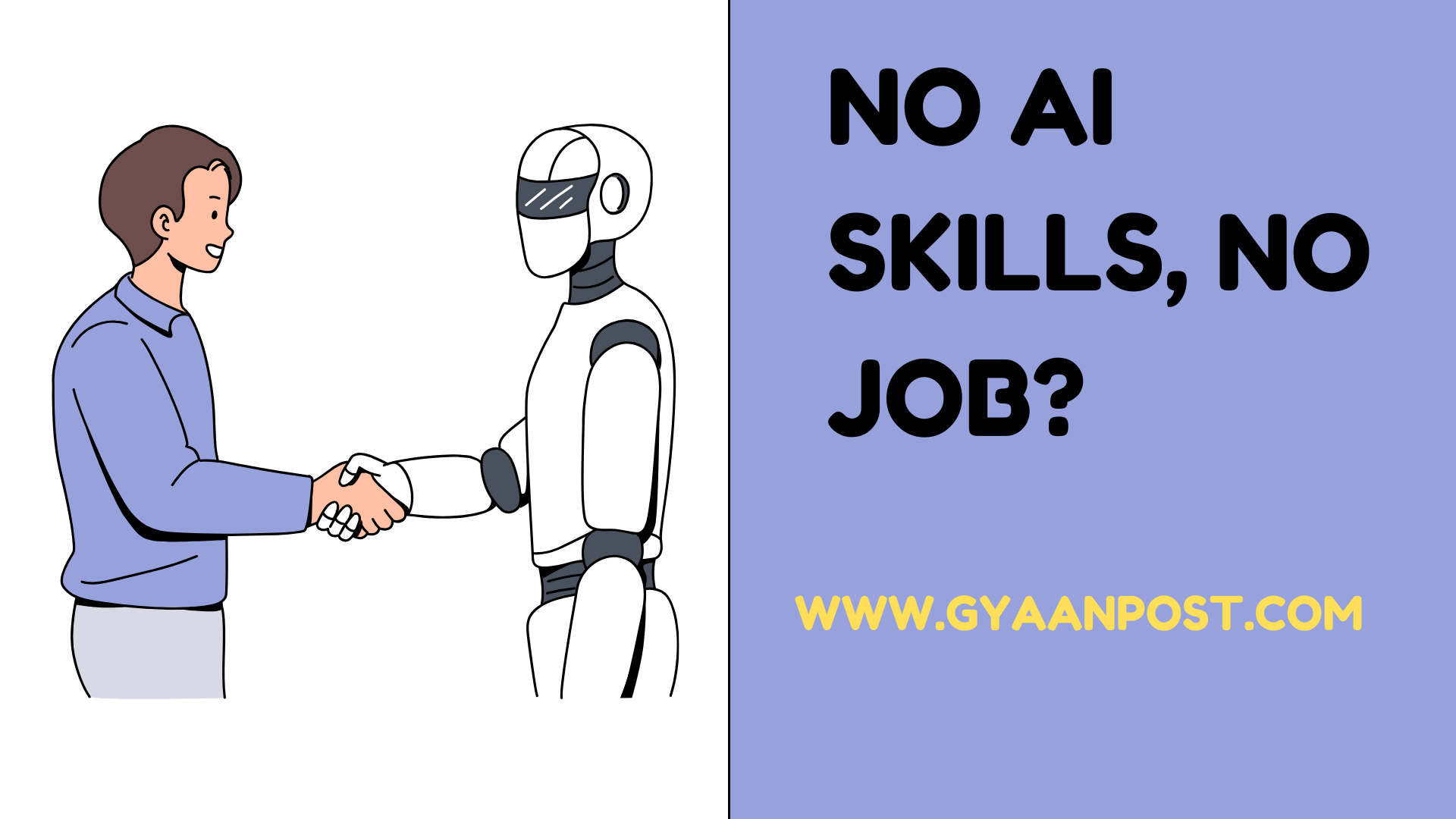
No AI, No Job: Hiring Norms Are Changing Fast, Say Experts
Hiring practices across industries are changing quickly. Employers are no longer asking only whether a candidate can do the job. They are increasingly asking whether the candidate can do the job using AI.
Across consulting, technology, media, design, and business roles, AI fluency is becoming a basic professional requirement, not an optional skill. Experts say candidates who lack familiarity with AI tools risk falling behind in interviews and hiring decisions.
AI Skills Are Now Being Tested in Interviews
Several large firms have started testing AI usage during interviews.
Some consulting companies now ask candidates to use internal AI tools during final interview rounds. Others are piloting AI-based screening in early stages to reduce human bias and speed up hiring.
Recruiters say this is not a sudden change. Many companies have been quietly shifting toward AI-based workflows for years. Interviews are now catching up with how work is actually done inside organisations.
For technical roles such as backend software engineer, candidates are increasingly expected to use AI for tasks like code review, debugging, system design assistance, and documentation.
You can see how this expectation applies to real roles here:
https://www.gyaanpost.com/it-job/backend-software-engineer
AI Is No Longer Treated as a Special Skill
Recruiters now view AI the same way they once viewed tools like email, Excel, or PowerPoint.
This means:
-
AI is expected to be part of daily work
-
Using AI is seen as improving efficiency, not cheating
-
Candidates who avoid AI are often seen as slower or less adaptable
This shift is not limited to tech jobs. Even business and client-facing roles now involve AI-assisted work. For example, positions like key account manager in retail increasingly use AI tools for reporting, forecasting, and customer analysis.
https://www.gyaanpost.com/it-job/key-account-manager-retail
The Hidden AI Filter in Hiring
One major concern among candidates is transparency.
Many job seekers say they are being evaluated on AI usage without being clearly told in advance. In some cases, job descriptions mention “AI familiarity” vaguely, while interviews test it directly through tasks or case studies.
Recruiters acknowledge that this gap exists. Some say hiring teams themselves are still figuring out how to clearly define AI requirements. Experts argue that companies should clearly state AI expectations in job descriptions, just as they list software or technical skills.
Is AI Optional or Effectively Mandatory?
Most employers insist that AI is just a tool, not a replacement for human skill. However, in practice, candidates who refuse to use AI are increasingly filtered out.
Recruiters explain this in simple terms:
-
AI increases output and speed
-
Two candidates with similar skills will not be evaluated equally if one uses AI and the other does not
-
Refusing AI creates a performance gap
Employers are not forcing AI usage, but they are choosing candidates who understand modern productivity tools.
What Interviews Are Actually Testing Now
Interviews are not testing whether candidates know every AI feature.
Recruiters are looking for:
-
The ability to ask the right questions
-
Critical thinking while using AI
-
The ability to verify and improve AI output
-
Judgment, not blind dependence
Strong candidates show they can think with AI, not simply follow it.
Fairness and Access to AI Tools
Some candidates worry that AI-based interviews may be unfair, especially if paid tools are involved.
Experts agree that:
-
Companies should provide equal access to tools during assessments
-
Testing candidates on tools they cannot access is unfair
At the same time, many widely used AI tools have free versions. This means access is less about money and more about curiosity and willingness to learn.
Who Should Upskill, and When?
Experts say responsibility depends on the career stage.
-
Entry-level candidates may receive some training
-
Mid-level and senior professionals are expected to already understand AI basics
Waiting for employers to teach foundational AI skills is risky, especially in competitive hiring markets.
This is especially important for freshers applying to high-paying internships and entry-level roles, where competition is intense and efficiency matters.
https://www.gyaanpost.com/it-job/microsoft-google-flipkart-acko-morgan-stanley-coindcx-tower-research-capital-hsbc-digicret-freshers-hiring-for-internship-job-ctc-30-85lpa-2025-2024-2023-2022-batch-apply-fast
Gen Z Advantage and Senior-Level Challenges
Recruiters are noticing a clear generational pattern.
Younger candidates, especially Gen Z, tend to be comfortable experimenting with AI. Many have used AI tools during studies, projects, and internships.
In contrast, some experienced professionals struggle because they approach AI too rigidly, treating it like a traditional software tool instead of a thinking partner.
This does not mean experience is losing value. It means experience combined with AI fluency is now the strongest combination.
What This Means for Job Seekers
The message from recruiters is clear.
AI skills are no longer about standing out. They are about staying employable.
Candidates do not need to become AI experts, but they do need to:
-
Be comfortable using AI tools
-
Understand when and how to apply them
-
Show adaptability and learning mindset
The key question is no longer whether AI belongs in your work. It is how long you can afford to ignore it.
Frequently Asked Questions
Why are employers asking for AI skills now?
Employers use AI to increase speed, accuracy, and productivity. Candidates who can work with AI deliver results faster, so companies now expect this skill.
Is AI fluency mandatory for all jobs?
AI fluency is not mandatory for every role, but for many white-collar jobs it is becoming a basic expectation, especially in consulting, tech, media, and operations.
Are companies testing AI skills in interviews?
Yes. Some companies now include AI-based tasks, case studies, or simulations during interviews to see how candidates use AI in real work situations.
Do job descriptions clearly mention AI requirements?
Not always. Many candidates are tested on AI use even when it is not clearly stated in the job description.
What kind of AI skills do recruiters expect?
Recruiters usually expect candidates to be comfortable using tools like ChatGPT, Perplexity, or similar AI assistants for research, writing, analysis, or problem-solving.
Is AI replacing human jobs?
No. Employers say AI is not replacing people. It is amplifying human output, similar to how computers replaced typewriters.
Can refusing to use AI affect hiring chances?
Yes. Recruiters often see resistance to AI as a lack of adaptability, which can reduce a candidate’s chances of getting hired.
Are AI-based interviews fair to all candidates?
Experts say interviews should provide equal access to AI tools. Testing candidates without providing access is considered unfair.
Who should take responsibility for learning AI skills?
Entry-level candidates may receive training Mid-level and senior professionals are expected to upskill on their own Waiting for employers to teach basic AI skills is risky.
Why do Gen Z candidates perform better with AI?
Gen Z candidates are more comfortable experimenting with AI tools. They adapt faster because they treat AI as a daily productivity partner.