If you've been pouring hours into perfecting your titles, meta descriptions, and content structure but your rankings still aren't moving, the missing piece is probably happening outside your website, not on it. That's where off-page SEO comes in.
Off-page SEO refers to all the actions taken outside of your website that improve search rankings, build authority, and strengthen your online reputation. In 2026, it matters more than ever, because search engines and AI-driven results increasingly prioritize trustworthy, authoritative sources over content that's merely well-optimized.
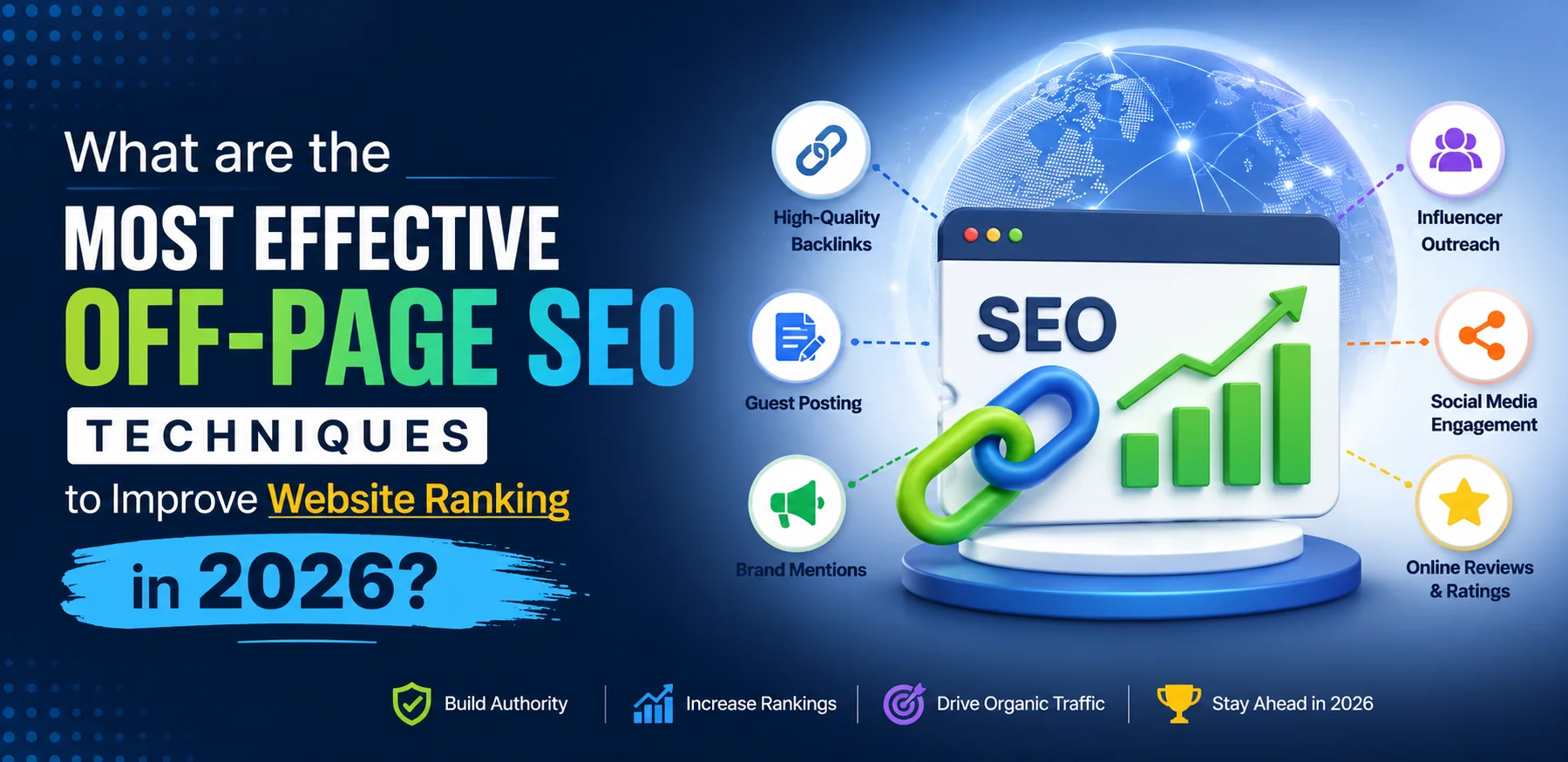
In this guide, we'll break down the off-page SEO techniques that are actually moving the needle this year — not outdated tactics that stopped working years ago, but the strategies real practitioners are using to build authority that both Google and AI search engines trust.
What Is Off-Page SEO, Really?
Off-page SEO includes all the activities performed outside your website that help improve your site's visibility and authority in search engine rankings. It includes strategies like link building, social media mentions, brand citations, and engagement across other authoritative websites. Unlike on-page SEO, which focuses on optimizing your site's content and structure, off-page SEO builds your website's reputation and trust through external signals.
Think of it this way: on-page SEO makes your site "findable," while off-page SEO makes your site "rankable." You genuinely need both working together — a beautifully optimized site with zero external trust signals will struggle to rank against a site that has earned real authority across the web.
Also Check Out -> What Is SEO Social Bookmarking
Why Off-Page SEO Matters Even More in 2026
The biggest shift this year isn't just about traditional rankings anymore. What's different in 2026 is that off-page strategies now also influence how often AI and generative search experiences recognize and cite your site as a trusted source. In other words, the same signals that help you rank on Google's traditional results are increasingly what determines whether AI Overviews and chatbot-style search tools mention your brand at all.
With that context in mind, let's get into the techniques that actually work.
1. High-Quality Backlink Building (Still the #1 Ranking Signal)
Backlinks remain the number one ranking signal in Google's search algorithm even in 2026. They function like votes of confidence from other websites, telling search engines that your content is valuable enough that someone else chose to reference it.
But not all backlinks are created equal. A link from a high-authority, topically relevant site carries significantly more weight than dozens of links from low-quality or unrelated sources. Pursuing quantity over quality is one of the most common off-page SEO mistakes — a handful of editorial backlinks from respected publications will outperform a pile of low-value directory links every time.
How to Earn Quality Backlinks
- Guest posting: Write valuable, well-researched content for high-authority websites in your industry. When they publish it, they typically include a link back to your site.
- Broken link building: Find broken links on relevant, high-traffic websites and offer your own content as a replacement resource. This remains one of the more creative and effective approaches, since you're solving a real problem for the site owner.
- Linkable assets: Create original research, in-depth guides, or free tools that other sites naturally want to reference. Defining and producing these "linkable assets" should be one of the first steps in any off-page SEO strategy.
Watch Your Anchor Text and Link Diversity
An overly optimized anchor text profile can trigger spam filters, so make sure your backlink profile includes a natural mix of branded, generic, and keyword-based anchors rather than the exact same phrase repeated across every link.
2. Digital PR: The Strategy Practitioners Rank #1
If there's one technique that's dominating conversations in the SEO community this year, it's digital PR. In a recent industry study, nearly half of SEO professionals named digital PR the most effective link-building tactic.
Digital PR involves sharing expert commentary, original research, or timely opinions on trending topics with journalists, creating opportunities to land quality links in major news outlets that would otherwise be unattainable. The most effective digital PR campaigns center on producing highly specific, data-supported content — original studies, surveys, or industry reports — and then proactively pitching that data to journalists and editors who are actively looking for sourced material.
A well-executed digital PR campaign can secure links from publications like Forbes, The Guardian, or major industry outlets, because journalists are constantly searching for credible data to cite in their coverage. The key is forming authentic relationships with writers, not mass-blasting generic pitches.
Why Digital PR Will Only Grow in Importance
Digital PR is expected to become even more crucial as search shifts further into the AI era. In traditional search, strong original insights alone could be enough to rank well — but as AI-generated answers pull from a narrower set of trusted sources, having your content cited by authoritative outlets becomes a more direct path to visibility.
3. E-E-A-T Signals Built Off-Site
E-E-A-T (Experience, Expertise, Authoritativeness, and Trustworthiness) has become a critical off-page SEO ranking factor, and most of it is measured through signals that occur off of your website, not on it. Adding author bios to your blog is a good start, but it barely scratches the surface of what actually builds E-E-A-T in the eyes of search engines.
Google's own search analysts have indicated that both backlinks and brand mentions — even unlinked ones — can help establish a site's E-E-A-T. That means being talked about on a sufficiently authoritative site, even without a clickable link, still carries real value.
Practical Ways to Build E-E-A-T
- Get your brand or your experts mentioned and discussed on industry forums and niche communities relevant to your field.
- Publish original studies or data that people naturally want to cite and reference elsewhere.
- Build a recognizable personal brand for your company's experts through consistent contributions, interviews, and public commentary.
4. Personal Brand and Thought Leadership
One of the more noticeable trends in 2026 is the rise of personal branding as a serious off-page SEO lever. When your name is consistently associated with high-quality content — through LinkedIn posts, podcast appearances, or guest interviews — it strengthens your author entity and builds the kind of trust that search engines reward.
This creates a compounding effect over time: stronger rankings lead to more visibility, which generates more organic mentions and backlinks, which in turn leads to more media opportunities. It's a flywheel, and the earlier you start building it, the faster it compounds.
This approach also has a side benefit worth noting — having a recognizable expert voice behind your brand increases the odds that AI search tools surface you as a go-to source in your niche, since these systems tend to favor content tied to identifiable, trustworthy authors.
5. Original Research and Data-Driven Content
Creating resources substantial enough to serve as primary source material is one of the most reliable ways to earn both backlinks and AI citations simultaneously. The most effective way to earn citations is by creating highly specific, authoritative content that's deeply useful to niche audiences — think original research, data-supported guides for underserved segments of your industry, or detailed answers to genuinely hard questions your competitors haven't addressed.
This kind of content tends to get cited not just by other websites, but increasingly by AI Overviews and generative search tools that pull data points directly into their answers. If you can become the original source that an AI tool cites when answering a question in your niche, you've effectively secured long-term visibility that doesn't depend on a single ranking position.
6. Social Media Engagement and Brand Signals
Social media platforms carry some of the highest domain authority of any sites online, which is part of why active engagement on these platforms remains a meaningful off-page SEO lever. While social shares themselves aren't a direct ranking factor in the traditional sense, they amplify your content's reach, increase the odds of organic backlinks, and contribute to broader brand visibility signals.
Original research and studies, for instance, are often first discovered through shares on platforms like LinkedIn or X before being picked up and discussed across forums and niche communities — which then snowballs into additional organic mentions and links.
7. Local Citations and NAP Consistency
For businesses with a local or regional presence, local citations remain a foundational off-page SEO technique. This involves listing your business information — name, address, and phone number (NAP) — across relevant directories and platforms.
Maintaining a consistent NAP across all directories is essential, since inconsistent citations can actively work against your local SEO performance rather than help it. If your business operates in multiple regional directories, take the time to audit and standardize this information periodically.
8. Backlink Audits and Toxicity Monitoring
Off-page SEO isn't only about acquiring new signals — it's also about protecting the ones you already have. A thorough backlink audit helps you assess the quality and relevance of your existing links and identify both opportunities and risks.
When auditing your backlink profile, pay attention to:
- Authority Score: How your domain's overall reputation compares to competitors.
- Referring Domains: The number of unique websites linking to you (more meaningful than raw backlink count).
- Toxicity Score: An indication of potentially harmful or spammy links that could be dragging your rankings down.
Regularly cleaning up toxic backlinks protects the authority you've worked hard to build and prevents a handful of bad links from undermining an otherwise strong profile.
9. Online Reputation Management
Search engines and users alike are paying closer attention to how a brand is perceived across the web — reviews, mentions, forum discussions, and third-party commentary all factor into how trustworthy your site appears. Reputation management means actively monitoring what's being said about your brand and addressing negative sentiment constructively, rather than ignoring it.
A consistent pattern of positive mentions and community engagement builds the kind of "neighborhood reputation" search engines increasingly factor into rankings: if your brand is frequently mentioned alongside established leaders in your industry, search engines will eventually start treating you as one of them.
10. Influencer and Industry Partnerships
Collaborating with credible voices in your niche — whether established influencers or respected industry experts — remains an effective way to expand your reach and earn high-quality backlinks. The key word here is relevant. Partnering with influencers who have genuine authority and audience overlap with your niche produces far better results than chasing reach alone, and this can take the form of podcast appearances, joint webinars, or expert-quote collaborations.
Common Off-Page SEO Mistakes to Avoid
As you build out your strategy, steer clear of these pitfalls that can do more harm than good:
- Chasing link quantity over quality: A handful of authoritative, relevant backlinks will always outperform a large volume of weak ones.
- Ignoring topical relevance: Links from sites unrelated to your industry carry far less weight, regardless of their authority score.
- Using manipulative tactics: Buying links, participating in link schemes, or using private blog networks remain high-risk strategies that can trigger search engine penalties.
- Over-optimizing anchor text: An unnatural anchor text pattern is a red flag that can trigger spam filters rather than build authority.
Building Your 2026 Off-Page SEO Strategy: Where to Start
If this list feels overwhelming, you don't need to tackle everything at once. A practical approach is to:
- Set clear goals — whether that's improving domain authority, ranking for specific keywords, or driving referral traffic.
- Audit your current backlink profile to understand where you stand and identify quick wins or toxic links to clean up.
- Define your linkable assets — the original research, guides, or tools that will naturally attract attention and citations.
- Choose one or two techniques that complement your existing content workflow rather than overwhelming your team, and build consistency from there.
- Review and iterate monthly, doubling down on what's working and cutting tactics that aren't delivering results.
Final Thoughts
Off-page SEO in 2026 is no longer about quick link wins or gaming the algorithm — it's about building lasting authority and becoming a source that both humans and AI systems trust and cite. The fundamentals haven't changed: earn genuine backlinks, create content worth citing, build real relationships with journalists and industry peers, and protect your reputation across the web.
What has changed is the stakes. With AI-powered search increasingly shaping how people discover information, brands that invest in authentic off-page authority today are the ones most likely to be the trusted, cited source tomorrow. Quality, relevance, and patience remain your best long-term strategy.