Digital Marketing for Real Estate Industry: Build Visibility, Generate Leads, and Drive Sales
The real estate industry has changed dramatically over the last decade. Buyers no longer walk into an agency office as their first step — they start on Google, scroll through Instagram listings, watch YouTube

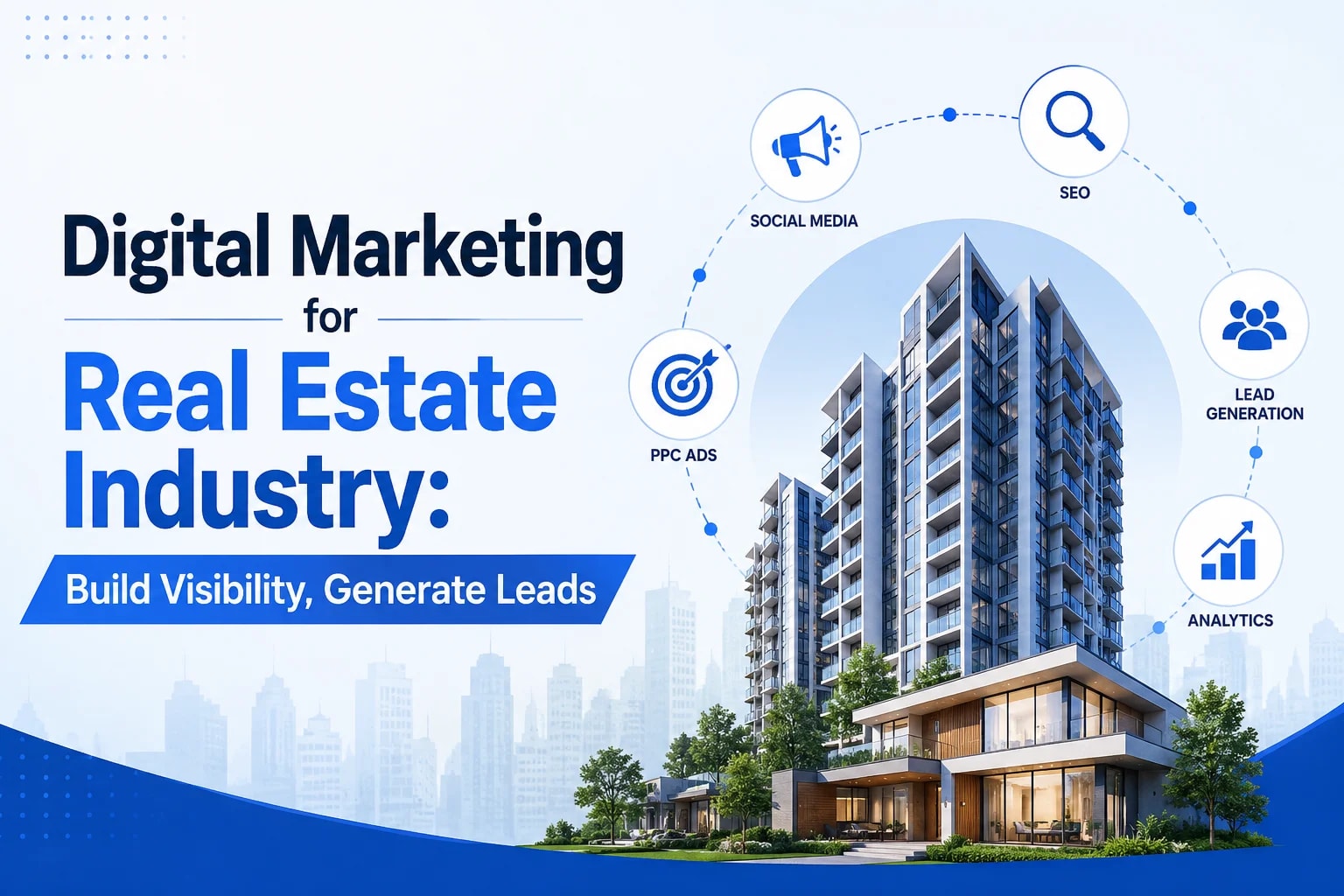
The real estate industry has changed dramatically over the last decade. Buyers no longer walk into an agency office as their first step — they start on Google, scroll through Instagram listings, watch YouTube walkthroughs, and compare neighborhoods on their phones long before they ever call an agent. This shift means that digital marketing for real estate is no longer optional; it is the foundation of how properties get discovered, how trust gets built, and how deals get closed.
At Gyaanpost, we work with agents, brokers, and property developers who are trying to figure out exactly this: how to stand out in a crowded market, generate consistent leads, and turn online visibility into signed contracts. In this guide, we break down the real estate marketing strategies that actually move the needle in 2026, along with a practical real estate SEO checklist you can start using today.
Why Digital Marketing Matters for Real Estate Today
The majority of home buyers now begin their property search online, often months before they are ready to transact. This means the first impression a buyer forms of a property, an agent, or a real estate brand happens on a screen, not in person. If your business is not visible in search results, social feeds, or local map listings, you are effectively invisible to a large share of your potential clients.
Digital marketing also levels the playing field. A small independent agent with a smart content strategy and consistent local SEO can outperform a large agency that relies purely on referrals and print ads. That's the opportunity Gyaanpost wants every real estate professional to understand and act on.
The Shift from Traditional to Digital
Newspaper listings, hoardings, and cold calling still exist, but they are supporting players now, not the lead generation engine. Online marketing for real estate agents has taken over because it is measurable, targetable, and far more cost-effective per lead than traditional advertising. Every click, view, and inquiry can be tracked, which means budgets can be optimized in real time instead of guessed at once a quarter.
Core Real Estate Marketing Strategies That Work
Successful real estate marketing strategies rarely rely on a single channel. Instead, they combine search visibility, content, social proof, and paid promotion into one connected system. Below are the pillars every agency or agent should build on.
1. Search Engine Optimization (SEO) for Property Websites
Your website is your digital storefront, and SEO is what gets people through the door. Ranking for location-based searches such as "3BHK flats for sale in your city" or "commercial property near me" puts you in front of buyers who already have intent to purchase. This is where a structured real estate SEO checklist becomes essential — covering on-page optimization, local listings, page speed, and mobile usability.
2. Local SEO and Google Business Profile
Most property searches are hyper-local. Optimizing your Google Business Profile with accurate contact details, service areas, photos, and client reviews helps you appear in the local map pack, which is often the very first thing a buyer sees. Encourage every satisfied client to leave a review — social proof is one of the strongest trust signals in real estate.
3. Content Marketing for Real Estate Companies
Buyers research extensively before making a decision as large as buying property. Content marketing for real estate companies fills that research gap. Neighborhood guides, market trend reports, home-buying checklists, and investment analysis all position your brand as the expert buyers can trust. Consistent, helpful content also compounds over time, driving organic traffic long after it's published.
4. Social Media and Visual Storytelling
Real estate is a visual product, which makes platforms like Instagram, Facebook, and YouTube natural fits. High-quality photography, drone footage, virtual tours, and short-form video walkthroughs generate significantly more engagement than static listings. Behind-the-scenes content — such as a day in the life of an agent or client testimonial videos — also builds the human connection that closes deals.
5. Paid Advertising (PPC and Social Ads)
Organic strategies take time to compound, but paid campaigns can generate leads immediately. Google Ads targeting high-intent keywords, combined with Facebook and Instagram lead-generation ads, allow you to reach specific buyer personas by location, income bracket, and interests. Retargeting ads are especially powerful in real estate, since most buyers view a listing multiple times before inquiring.
6. Email and WhatsApp Nurture Campaigns
Not every lead is ready to buy immediately. A nurture sequence that sends new listings, market updates, and personalized property recommendations keeps your brand top of mind until the buyer is ready to act. This is one of the most underused parts of online marketing for real estate agents, yet it consistently delivers some of the highest returns because it targets warm leads who already know your brand.
Using an AI Content Strategy for SEO in Real Estate
One of the biggest shifts in the industry right now is the adoption of an AI content strategy for SEO. Real estate businesses generate huge amounts of repetitive content — listing descriptions, neighborhood pages, FAQ sections — and AI tools can accelerate this process without sacrificing quality, as long as the output is reviewed and refined by a human expert.
At Gyaanpost, we recommend using AI to draft first versions of listing copy, generate keyword clusters, and identify content gaps against competitors, then layering in local expertise, real client stories, and updated market data. This hybrid approach lets teams scale content production while still meeting Google's emphasis on helpful, experience-based content. AI can also help identify which questions buyers are actually asking, allowing you to build FAQ and blog content that answers real search intent rather than guessing at topics.
The key is balance: AI accelerates research and drafting, but the final content should always reflect genuine local knowledge and a real point of view, since generic AI-only pages tend to underperform in search rankings over time.
The Real Estate SEO Checklist
Use this real estate SEO checklist as a working reference whenever you audit your website or plan new content:
• Claim and fully optimize your Google Business Profile with correct name, address, phone number, and service areas.
• Target long-tail, location-specific keywords such as "apartments for sale in [neighborhood]" instead of generic terms.
• Ensure the website loads in under three seconds and is fully mobile-responsive, since most property searches happen on phones.
• Add schema markup for property listings (price, location, images) to improve visibility in search results.
• Publish fresh, locally relevant blog content at least twice a month — guides, market updates, and buyer resources.
• Build quality backlinks through local business directories, real estate portals, and guest posts on relevant sites.
• Optimize every listing page with unique titles, meta descriptions, and descriptive alt text on images.
• Collect and showcase genuine client reviews and testimonials across your website and Google profile.
• Track keyword rankings, organic traffic, and lead conversion rates monthly to refine your approach.
Turning Visibility into Leads and Sales
Traffic and visibility are only useful if they convert. A common mistake in digital marketing for real estate is focusing entirely on getting eyeballs while neglecting the conversion path once a visitor lands on the site. Every listing page should have a clear, low-friction way to inquire — a callback request, a WhatsApp chat button, or a short form asking for a preferred visit time.
Landing Pages Built for Conversion
Dedicated landing pages for specific projects or campaigns consistently outperform generic homepages. They should include high-quality visuals, a floor plan, pricing details, nearby amenities, and a single, obvious call to action. Removing distractions like unrelated navigation links can significantly increase inquiry rates.
CRM Integration and Speed to Lead
Leads go cold fast. Connecting your ads, forms, and chat tools to a CRM ensures every inquiry is logged and followed up on within minutes, not hours. Studies consistently show that response speed is one of the strongest predictors of whether a lead converts into a site visit and, eventually, a sale.
Data-Driven Optimization
Digital marketing is never a one-time setup. Reviewing analytics monthly — which channels bring the most qualified leads, which content ranks and converts best, which ad creatives fatigue fastest — allows you to continuously reallocate budget toward what's actually working, rather than what worked last year.
Building a Long-Term Real Estate Marketing System
The agents and agencies who win consistently are the ones who treat digital marketing as an ongoing system rather than a series of one-off campaigns. That means a content calendar, a regularly updated SEO checklist, an active social presence, and a lead nurture process working together year-round.
This is exactly the kind of structured approach Gyaanpost helps real estate businesses put in place — combining practical SEO fundamentals, an efficient AI content strategy for SEO, and conversion-focused website design so that visibility actually turns into revenue, not just traffic.
Common Digital Marketing Mistakes Real Estate Businesses Make
Even with a solid strategy on paper, execution mistakes can quietly drain your marketing budget and slow down lead flow. Being aware of these common pitfalls can save months of wasted effort.
Treating the Website as a Brochure, Not a Lead Engine
Many real estate websites are built to look attractive but forget the basics of conversion — clear calls to action, fast load times, and easy-to-find contact options. A beautiful site that doesn't capture inquiries is a missed opportunity every single day it stays live.
Inconsistent Content Publishing
Publishing five blog posts in one month and then going silent for the next three undermines SEO momentum. Search engines and audiences both reward consistency. A realistic, sustainable content calendar will always outperform a burst of activity followed by long gaps.
Ignoring Mobile Experience
A large share of property research happens on smartphones during commutes or breaks. If image galleries are slow to load, forms are hard to tap, or text is too small to read, potential buyers will simply leave and look elsewhere. Mobile-first design is no longer optional in real estate marketing.
Not Tracking the Right Metrics
Vanity metrics like page views or social media followers feel good but don't pay the bills. The metrics that matter are cost per qualified lead, inquiry-to-site-visit ratio, and ultimately, deals closed. Anchoring your reporting around these numbers keeps the entire team focused on outcomes that grow the business.
Emerging Trends Shaping Real Estate Marketing
Looking ahead, a few trends are already reshaping how successful agencies approach online marketing for real estate agents. Short-form video continues to dominate discovery, with buyers preferring quick, authentic walkthroughs over polished but generic promotional clips. Voice and conversational search is also growing, meaning content written in a natural, question-and-answer format tends to perform better than keyword-stuffed pages.
AI-powered chat assistants on websites are becoming standard for answering basic buyer questions instantly, capturing leads even outside business hours. And as search engines increasingly reward genuinely useful, experience-based content, brands that invest in real local expertise — not just automated content — will have a lasting advantage over competitors chasing shortcuts.
Final Thoughts
Digital marketing for real estate is no longer a nice-to-have add-on — it's the primary way buyers discover, evaluate, and choose the properties and professionals they work with. By combining strong local SEO, genuinely useful content marketing for real estate companies, smart use of AI for content and research, and conversion-optimized landing pages, agents and developers can build a pipeline of leads that keeps growing month after month.
Start small if you need to — claim your Google Business Profile, publish one useful blog post a week, and make sure every listing page has a clear next step for the visitor. Over time, these consistent efforts compound into the kind of visibility, credibility, and lead flow that traditional advertising simply can't match. Gyaanpost will keep bringing you practical, no-fluff guides like this one to help you grow your real estate business online.